





State Rail Network
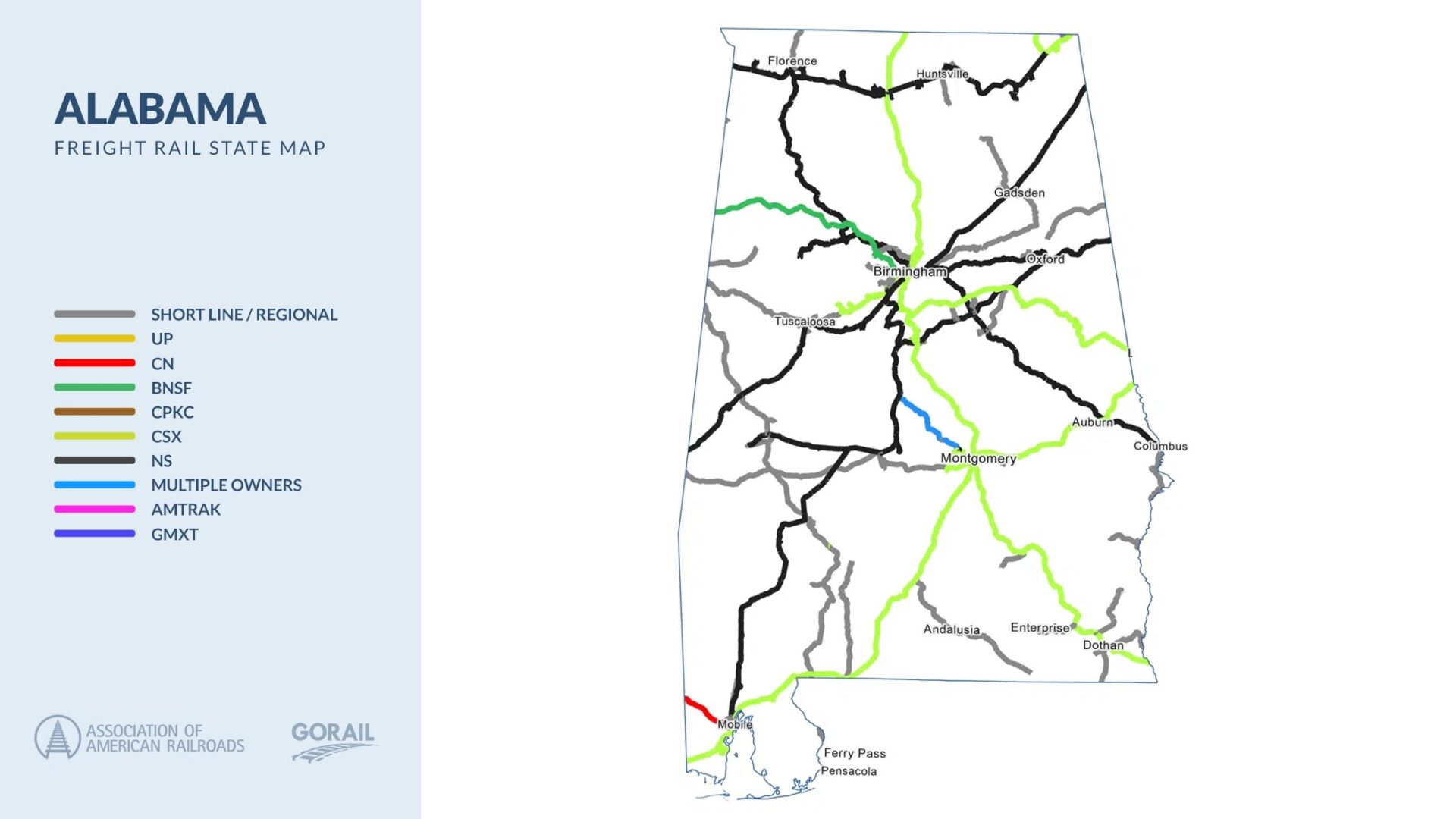
Class I Railroads
| BNSF Railway | 231 |
| Canadian National | 22 |
| Canadian Pacific Kansas City | 44 |
| CSX Transportation | 1,011 |
| Norfolk Southern | 1,304 |
| Total | 2,612 |
Short Line Railroads
| Alabama & Gulf Coast Railway | 374 |
| Alabama & Tennessee River Railway | 120 |
| Alabama Export Railroad | 12 |
| Alabama Southern Railroad | 68 |
| Alabama Warrior Railway | 2 |
| Total | 1,091 |

Moving Alabama's Economy. Connecting Communities.
With Alabama producing a quarter of all automobiles manufactured in the South and the Port of Mobile preparing to handle more traffic flowing through an expanded Panama Canal, freight rail is helping power the state’s economy. Railroads connect manufacturers, farmers, ports, and businesses across Alabama while reducing highway congestion, lowering emissions, and supporting thousands of good-paying jobs.
Originating
Received
State Grants
The Rail-Highway Program
The Railroad Modernization Act Tax Credit
Rail Heritage
Alabama’s rail story began in 1832 with the opening of the Tuscumbia Railway, one of the nation’s earliest railroads. Built to bypass the Tennessee River’s Muscle Shoals, it helped demonstrate how rail could connect communities and expand commerce. The line also operated the first steam locomotive west of the Allegheny Mountains, marking Alabama’s place in the early history of American railroading. Although rail construction slowed during the Civil War, the decades that followed saw rapid expansion as new rail lines fueled Alabama’s growing coal, iron, and steel industries while connecting communities and supporting passenger travel.

Why Freight Rail Matters

Supports Manufacturing
Rail connects manufacturers with suppliers and customers across North America, efficiently moving raw materials and finished goods.

Strengthens Agriculture
Rail helps move crops, forest products, fertilizers and other agricultural goods efficiently and affordably.

Reduces Congestion
Moving freight by rail removes trucks from highways, helping reduce traffic and wear on road infrastructure.

Protects the Environment
Freight rail is significantly more fuel efficient than moving freight by truck, helping reduce fuel use and greenhouse gas emissions.
Rail at Work
 Safety
 FRA Data Shows Major Rail Safety Gains in 2025
Washington, D.C. – New data from the Federal Railroad Administration (FRA) shows 2025 was a historic year for freight rail safety. Accident and injury rates…
 Intermodal
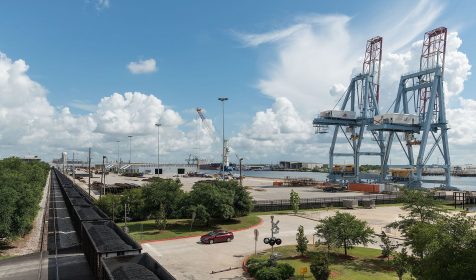
 Intermodal Rail Connections Getting a Boost in Alabama
Mobile, AL — Any recent visitor to the Port of Mobile—Alabama’s only seaport and one that boasts access to nine different freight railroads—would be hard-pressed…
 Policy Issues
 Rail Policy Landscape in the 117th Congress
Washington, D.C. — As the 117th Congress dives into its work—and committee assignments and leadership roles have been finalized—we now know more about the key…

44 percent
decrease
in rail rates on average from 1981 to today.
That means the average rail customer today can ship significantly more freight for about the same price they paid 40 years ago.
State Director
Alabama
Christy Sammon
State DirectorChristy Sammon joined GoRail in May 2015. She has over 15 years of experience in the governmental relations field.
Featured Rail Supply Companies






Stay informed with The Spur, GoRail's monthly newsletter, covering rail news, grants, policy updates, and stories from communities nationwide.