




State Rail Network
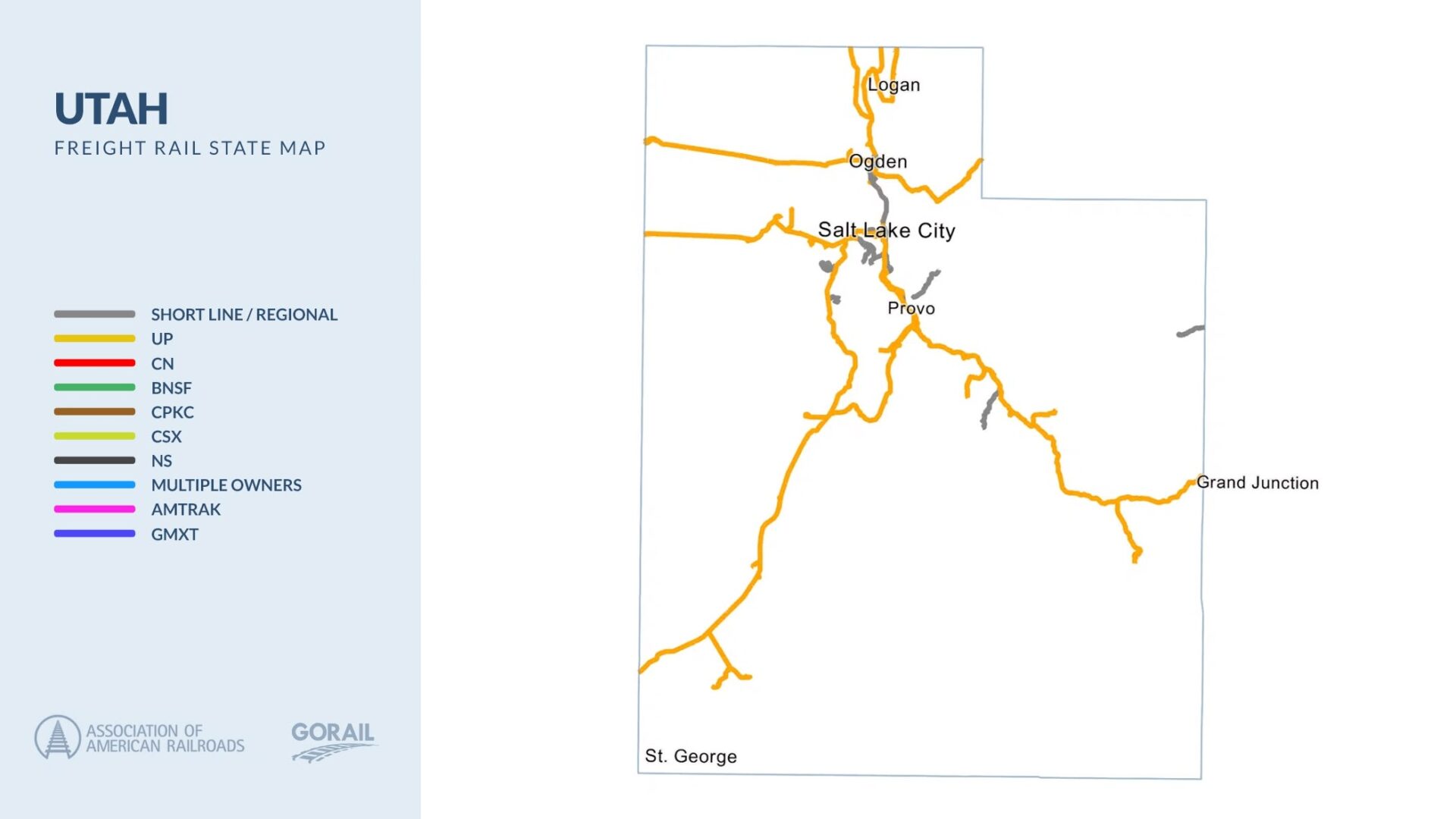
Class I Railroads
| BNSF Railway | 437 |
| Union Pacific | 1,265 |
| Total | 1,702 |
Short Line Railroads
| Comstock Mountain Lion Railway | 15 |
| Salt Lake, Garfield & Western Railway | 16 |
| Savage Bingham & Garfield | 21 |
| Utah Central Railway | 19 |
| Utah Railway | 405 |
| Total | 476 |

Moving Utah's Economy. Connecting Communities.
Those present in May of 1869 when the golden spike was driven at Promontory Summit to commemorate the completion of the first transcontinental railroad could little have imagined what railroads would become in the 21st century.
Originating
Received
State Grants
UDOT Railroad Crossing Safety Grant Program Application
Active Warning Device Maintenance Reimbursement
Rail Heritage
A telegraph operator sent a single word, “done,” and the country learned it had a coast-to-coast railroad. That word marked the completion of the First Transcontinental Railroad on May 10, 1869, at Promontory Summit, where the Union Pacific, built west from Omaha, met the Central Pacific, built east from Sacramento. Two locomotives, Union Pacific’s No. 119 and Central Pacific’s Jupiter, met nose to nose as the news went out. Thousands of workers, including Chinese, Irish, and other immigrant laborers, had built the two lines across mountains and desert to make that meeting possible. That single connection reshaped the country’s economy and turned Utah into a lasting crossroads of the nation’s rail network.

Why Freight Rail Matters

Supports Manufacturing
Rail connects manufacturers with suppliers and customers across North America, efficiently moving raw materials and finished goods.

Strengthens Agriculture
Rail helps move crops, forest products, fertilizers and other agricultural goods efficiently and affordably.

Reduces Congestion
Moving freight by rail removes trucks from highways, helping reduce traffic and wear on road infrastructure.

Protects the Environment
Freight rail is significantly more fuel efficient than moving freight by truck, helping reduce fuel use and greenhouse gas emissions.
Rail at Work
 Safety
 FRA Data Shows Major Rail Safety Gains in 2025
Washington, D.C. – New data from the Federal Railroad Administration (FRA) shows 2025 was a historic year for freight rail safety. Accident and injury rates…
 Advocacy
 Notes From The Field: Rail Policy in Utah
Salt Lake City, UT — Utah may be known for its heightened landscapes, but during my recent visit there for GoRail, the real view was…
 Economic Impact
 For Northwest New Mexico, a New Rail Link Is Just Around the Corner
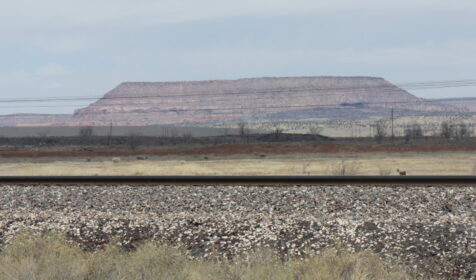
The Four Corners region shared by Arizona, Colorado, New Mexico and Utah is known more for stunning landscapes and isolation than for rail access. Even…
44 percent
decrease
in rail rates on average from 1981 to today.
That means the average rail customer today can ship significantly more freight for about the same price they paid 40 years ago.
State Director
Utah
Nate Kaplan
State DirectorWith a decade of experience working in the rail industry, Nate covers the Western United States and parts of New England for GoRail. His background in local, state, and federal government makes him an effective transportation and public policy leader.
Featured Rail Supply Companies



Stay informed with The Spur, GoRail's monthly newsletter, covering rail news, grants, policy updates, and stories from communities nationwide.