House Transportation and Infrastructure Committee lawmaker rides along with a Watco short line crew and talks tax credits, safety policy, and grant funding.
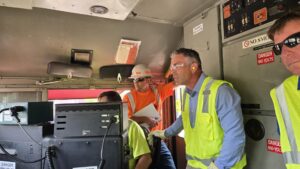
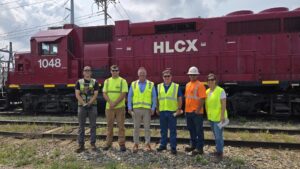
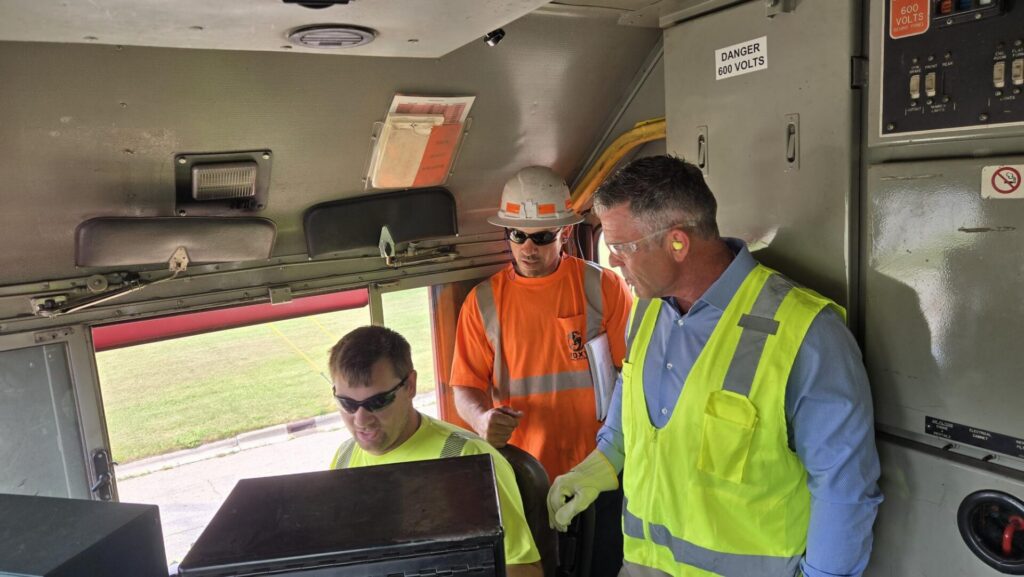
Green Bay, Wis. — U.S. Representative Tony Wied (WI-8) joined officials from the Fox Valley & Lake Superior Rail System (FOXY), Watco, and GoRail on August 11 for a tour of a working locomotive and the rail operations that serve three local industries in Green Bay.
Rep. Wied watched a crew pick up empty rail cars and prepare them for transfer to the CN yard for switching — a routine move for a short line crew, but a rare window for a member of Congress into what the day-to-day work of locomotive crews.
“It was a pleasure to join officials from the Fox Valley & Lake Superior Rail System (FOXY), Watco, and GoRail to learn more about their daily operations and the critical role they play in supporting so many of our industries right here in Wisconsin’s 8th District. As a member of the House Committee on Transportation and Infrastructure, I look forward to continuing to be a strong partner for them in Washington and helping ensure they can continue keeping our industries moving and our economy growing for many years to come,” said Congressman Tony Wied.
Much of the conversation focused on how short line railroads like FOXY differ from the larger “Class I” railroads across the U.S. — different operating environments, different scale, different challenges. That distinction matters in Washington, where one-size-fits-all rail policy can negatively impact certain rail operations on the ground.
The group walked Rep. Wied through local infrastructure needs, including track conditions, and made the case for reauthorizing the Short Line Railroad Tax Credit (45G), which helps short lines like FOXY keep track in a state of good repair.
The discussion also covered the ongoing debate over federal rail policy and the importance of ensuring that safety regulations are grounded in data and operational realities. Participants emphasized that freight rail’s strong safety record has been driven by continuous private investment and innovation, and cautioned against prescriptive federal mandates that could weaken the efficiency of the freight rail network without delivering measurable safety benefits.
“Rail safety should always be guided by evidence and what actually improves safety outcomes,” said Emily Traiforos, Wisconsin State Director for GoRail. “As Congress develops the next surface transportation bill, it’s important to avoid unsupported mandates that could ultimately make it harder and more expensive for freight railroads to move the goods Wisconsin businesses and families rely on every day.”
Rail grant funding also came up during the discussion, including the importance of preserving competitive federal programs such as the Rail Crossing Elimination (RCE) Program and the Consolidated Rail Infrastructure and Safety Improvements (CRISI) Program, which help communities improve safety, strengthen freight rail infrastructure, and support economic growth. The group highlighted rail swing bridges that cross the Fox River, which received $2 million through the CRISI program to upgrade aging infrastructure, improve fluidity, and boost safety. Rep. Wied expressed appreciation for the role these investments play in Wisconsin and indicated his willingness to support continued funding for these successful rail grant programs.
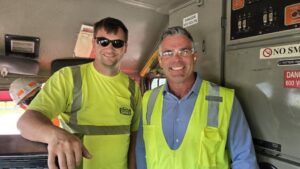
One unplanned highlight: the locomotive engineer leading the tour turned out to be a distant relative of the Congressman, sharing the same last name — a reminder that in a lot of Wisconsin communities, the people who run the railroad and the people who represent them in Washington aren’t so far removed from each other.
The visit gave Rep. Wied a close look at the role freight rail plays in supporting local industry, area jobs, and the broader supply chain that connects Green Bay to the rest of the country.