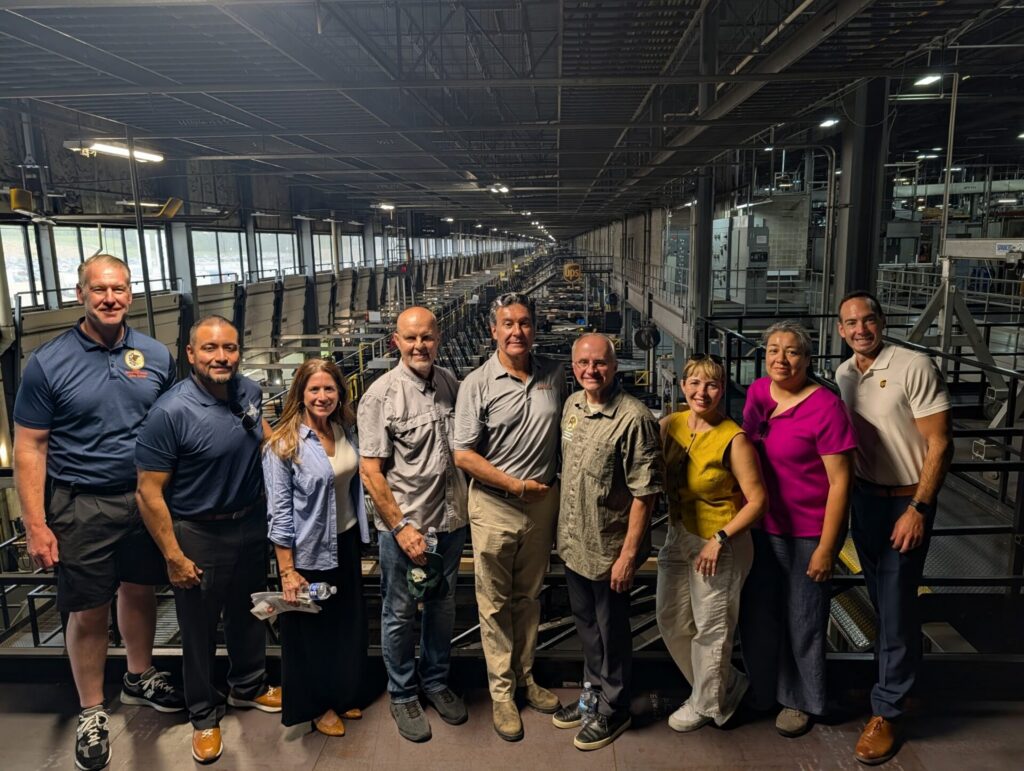

Hodgkins, IL — Recently, GoRail State Director Emily Traiforos joined members of the Illinois delegation to tour the BNSF intermodal terminal in Hodgkins, Illinois, and the adjacent UPS Chicago Area Consolidation Hub (CACH). The visit offered a firsthand look at how freight rail, trucking, and package distribution work together to keep goods moving across the country every day.
A Key Link in the National Freight Network
Located southwest of Chicago, the BNSF Willow Springs intermodal facility is a key link in the nation’s freight network. The terminal handles expedited intermodal traffic and works closely with the UPS CACH facility, one of the largest package-sorting operations in the world. A private roadway directly connects the two facilities, allowing freight to move seamlessly between rail and distribution operations.
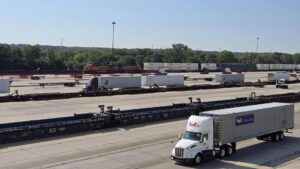
What stood out was the scale and efficiency of the operation. Intermodal trains arrive and depart throughout the day while containers and trailers are transferred between railcars and trucks using advanced lifting equipment and automated technology. The facility utilizes optical character recognition systems to quickly identify equipment and track shipments, helping improve operational efficiency and safety.
Inside UPS’s Largest Intermodal Ground Hub
Next door, the UPS CACH facility demonstrated logistics on an entirely different scale. As the largest ground hub in UPS’s network, the facility sorts millions of packages through an extensive automated system of conveyors, scanners, and sorting equipment. Watching packages move through the operation highlighted the sophisticated technology and coordination required to meet the demands of today’s economy.
Rail and Trucking: Partners, Not Competitors
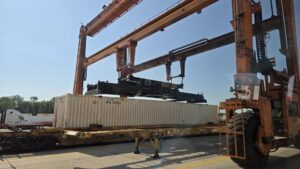
The tour also emphasized the importance of intermodal transportation, where rail and trucking work together rather than compete. Rail provides an efficient long-haul solution for moving freight across the country, while trucks handle local pickup and delivery. This partnership helps lower transportation costs, reduce highway congestion, and strengthen supply chain reliability.
Why Location Matters
One of the biggest advantages of the Hodgkins location is its connectivity. The facilities are strategically positioned with direct access to the Tri-State Tollway (I-294) via the nearby 75th Street interchange, providing efficient connections to regional and national highway networks. Combined with BNSF’s rail connectivity and UPS’s distribution capabilities, the location serves as a critical gateway for freight moving throughout the Midwest and across North America.
The visit reinforced the importance of continued investment in freight infrastructure and technology. Facilities like BNSF’s Willow Springs terminal and the UPS CACH hub support thousands of jobs, strengthen supply chains, and help ensure products reach businesses and consumers efficiently. Their success demonstrates the value of integrating rail, highway, and distribution networks into a seamless transportation system.
Village President Ernest Millsap accredits Hodgkins as a transportation hub. “The partnership between BNSF, UPS, and the Village has created jobs, strengthened our tax base, and allowed us to provide services while maintaining a strong business climate. These facilities show how strategic infrastructure investments can benefit both local communities and the national economy.”
A Model for the Future of Freight
As policymakers consider the future of America’s transportation network, Hodgkins serves as a powerful example of why strategic location matters. With access to one of the nation’s largest rail networks, one of the world’s largest package-sorting facilities, and the Tri-State Tollway, this logistics hub sits at the crossroads of commerce. The ability to connect rail, trucks, and distribution operations in one location helps keep freight moving efficiently, supports economic growth, and reinforces the Chicago region’s role as the freight capital of North America.