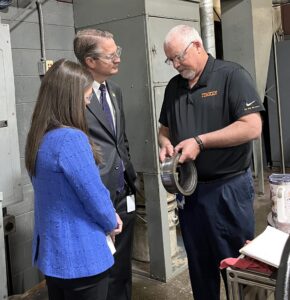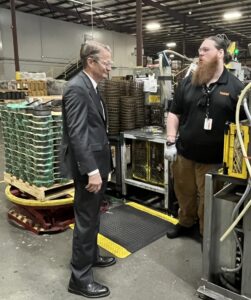

MASCOT, TENN. — U.S. Representative Tim Burchett (TN-02), a member of the House Transportation and Infrastructure Committee and its railroad subcommittee, toured the Timken facility in Mascot, Tennessee on March 30 for a firsthand look at the company’s role in supporting the nation’s rail network.
During the visit, organized by GoRail, Rep. Burchett joined Timken representatives for a closer look at the facility’s work on the inspection, repair, and remanufacturing of industrial bearings used in the rail industry. The tour highlighted how refurbished rail wheel bearings can help improve efficiency, reduce costs, and extend the lifecycle of critical rail components.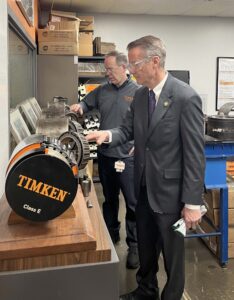
“I’m very grateful to Timken for the opportunity to tour the Mascot facility. It was impressive to see how the company is driving innovation, particularly in railroad transportation,” said Rep. Burchett. “I also appreciated the chance to meet the hard-working men and women who make this work possible, and I look forward to visiting again soon.”
America’s freight rail network—privately owned and funded—moves roughly 40% of the nation’s long-distance freight and plays a central role in keeping goods affordable. By moving large volumes efficiently over long distances, rail helps lower transportation costs across the supply chain, benefiting businesses and consumers alike.
In Tennessee, freight rail is a vital economic engine. The state’s network includes 27 freight railroads operating across 2,643 miles of track and supporting 2,917 direct jobs. Tennessee railroads move enough freight annually to replace an estimated 10.6 million truck trips—reducing congestion and easing wear and tear on highways.
While railroads are the most visible part of the industry, they rely on a vast ecosystem of suppliers and contractors like Timken to manufacture, maintain, and service critical components. A newly released economic impact report shows the rail supply industry contributes $127 billion annually to U.S. GDP and supports approximately 906,000 jobs nationwide.
Following the tour, participants convened for a discussion on federal transportation policy and its impact on the rail industry. The conversation focused on the upcoming surface transportation reauthorization and issues affecting both railroads and their supply partners, including the importance of fostering innovation, maintaining a balanced regulatory environment, and ensuring continued investment in rail infrastructure.
As Congress considers the next surface transportation bill, stakeholders emphasized the need for policies that support the full rail ecosystem—from operators to suppliers—so the industry can continue to drive economic growth, support jobs, and deliver goods efficiently across the nation.