
Washington, DC — States across the nation are recognizing freight rail as a core economic strategy by supporting their own grant programs to supplement federal grants and railroads’ private investments. Recent funding moves in Pennsylvania, North Carolina, and New York point to a clear trend: states are putting public dollars toward freight infrastructure to strengthen supply chains, attract industry, and reduce long-term pressure on highways.
Pennsylvania: Big Dollars, Industrial Focus
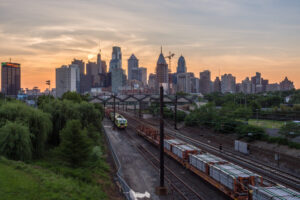
At the end of January, PennDOT announced $53 million in funding for 30 rail projects through its Rail Transportation Assistance Program (RTAP) and Rail Freight Assistance Program (RFAP). With more freight railroads than any other state, Pennsylvania has been a forerunner in leveraging funding for freight infrastructure, establishing RFAP in 2013, one of the only state-level programs of its kind in the country.
“Pennsylvania’s rail freight network supports family sustaining jobs and connects Pennsylvania communities to the global economy while bolstering local economic development,” said PennDOT Secretary Mike Carroll.
The projects, which are expected to create and sustain an estimated 450 jobs, target short line upgrades, industrial access, and network capacity. From Allegheny to York, these are the kinds of network upgrades that keep manufacturing sites competitive and rural producers connected to national markets.
North Carolina: Rail as an Economic Development Tool
North Carolina continues to treat freight rail as a recruitment asset, not just a transportation mode. A recent round of state grants from the N.C. Department of Transportation’s Freight Rail & Rail Crossing Safety Improvement (FRRCSI) program is investing $16.3 million to improve freight rail infrastructure by expanding capacity, improving short line service, and strengthening links to major logistics hubs.

The Rail Division’s grants are matched by investments from participating railroad companies and the N.C. Ports Authority. In total, these partnerships are putting $41.5 million into projects that improve North Carolina’s freight rail network, for example upgrading and improving over 95 miles of track, eight bridge and culvert improvements, and stronger port connectivity.
“These projects deliver significant benefits to North Carolina’s freight rail network,” said Jason Orthner, director of NCDOT’s Rail Division. “By working closely with our railroad partners, we are strengthening reliability and resiliency, supporting businesses across the state, and reinforcing the rail infrastructure that drives North Carolina’s economy.”
New York: Modernizing a High-Demand Network
New York in January awarded $101 million across 25 rail and port projects through its state Passenger and Freight Rail Assistance Program (PFRAP), one of the largest coordinated rail funding rounds in the country.
“Freight rail and port infrastructure is critical to New York’s global footprint while providing cost-effective solutions to getting goods to market quickly and efficiently,” said
 Marie Therese Dominguez, NYSDOT commissioner. “New York is making crucial infrastructure investments that will help the state remain competitive as an economic leader while reducing greenhouse gas emissions.”
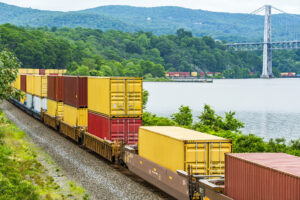
The projects focus on modernizing freight corridors, improving yard capacity, rehabilitating bridges, and expanding intermodal facilities that connect rail to maritime shipping. These reliability and resiliency upgrades across major trade corridors are investments designed to keep freight moving efficiently through one of the nation’s most infrastructure-intensive environments, with the largest grants awarded in the New York City area.
Why State Rail Grants Matter
Freight rail operates differently from most infrastructure systems. Railroads privately fund and maintain their networks, which means public grants function as targeted partnerships rather than primary funding streams.
State programs typically prioritize projects with shared public benefits such as reducing truck congestion, improving grade crossing safety, preserving rural freight access, and supporting job-generating industrial development. Even relatively modest grants can unlock larger private railroad investment while delivering measurable public returns.
Taken together, these investments reflect a broader shift in which freight rail is increasingly being treated by states as strategic economic infrastructure rather than a secondary transportation program.
The Federal Link: What Reauthorization Means
The growth of these state programs does not eliminate the need for federal partnership — it reinforces it.
Many projects like those in Pennsylvania, North Carolina, and New York rely on layered funding that combines state dollars with federal programs such as CRISI, Railroad Crossing Elimination (RCE), and other grants.
As Congress develops the next surface transportation reauthorization, maintaining these federal rail programs will be critical to scaling state investments, advancing safety projects, and expanding freight capacity nationwide.
The opportunity now is to ensure federal rail policy keeps pace with state-level investment already moving forward. Use your voice to contact your representatives and encourage robust funding for these critical programs.