

Washington, D.C. — When winter weather rolls in, most Americans adjust their plans. Schools close, flights are delayed, and highways fill with accidents and stalled vehicles. For freight railroads, however, winter is not an interruption — it’s an operating condition they plan for year-round.
Across the country, freight railroads prepare for snow, ice, and extreme cold long before the first storm is in the forecast because the goods Americans rely on don’t stop moving when temperatures drop.
Planning Starts Long Before the First Storm
Seasonal preparation is a standard part of railroad operations. Each fall, freight railroads review winter operating plans tailored to their regions, recognizing that winter in North Dakota presents very different challenges than winter in Georgia.
BNSF Railway, for example, updates winter action plans across all its operating divisions ahead of the cold season, staging snow-removal equipment, testing switch heaters, and preparing crews for winter conditions. The railroad has emphasized that proactive preparation is critical to maintaining service and safety during severe weather.
CN follows a similar approach, publishing an annual Winter Plan that details how the railroad prepares infrastructure, equipment, and personnel for cold temperatures and heavy snow. CN notes that early planning allows crews to respond faster when storms hit and helps reduce service disruptions across its North American network.
Cold Weather Is Hard on Rail Infrastructure
Winter weather creates challenges that aren’t always visible to those outside the industry. Extreme cold causes steel rails to contract, increasing the risk of rail breaks if issues are not identified early. Snow and ice can interfere with switches, potentially halting traffic if they freeze.
As Union Pacific explains, winter operations require more frequent inspections and operational adjustments, including changes to train speed and length, because braking systems and air pressure behave differently in sub-zero temperatures. These precautions are designed to keep trains moving safely, even if conditions require slower operations.
When Winter Hits, Coordination Takes Over
When a winter storm arrives, railroads shift from preparation to real-time coordination. Internal command centers monitor weather and network conditions around the clock, directing crews and equipment to problem areas as conditions change. But keeping freight moving in winter depends as much on technology as it does on people.
Across the network, railroads deploy specialized snow-fighting tools to keep infrastructure operational. Track switch heaters use hot air, electric elements, or targeted heating systems to prevent ice from locking switches in place, allowing trains to safely change routes even in sub-zero temperatures. Many of these systems are remotely monitored, giving dispatchers early warnings before a frozen switch becomes a service disruption.
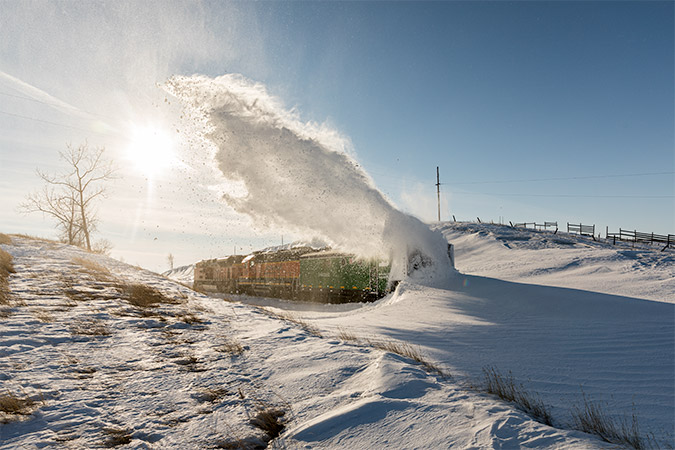
Most locomotives use front-mounted plows to push snow off the rails, but major storms often call for heavier equipment. Railroads deploy specialized on-track machinery and snow-clearing vehicles designed to move large volumes of snow quickly, keeping mainlines and yards open.
Union Pacific’s Air Forced One fleet takes a different approach, using jet-powered blasts of cold air to clear snow from switches and track components. Because it relies on cold air rather than heat, the system avoids melting and refreezing — a critical advantage during prolonged sub-zero conditions.
Locomotives are also equipped with idle-reduction technology that keeps engines and critical systems warm without unnecessary fuel burn, improving reliability during prolonged cold snaps.
Preparing for More Extreme Winters Ahead
Winter planning is also evolving as weather patterns become less predictable. Freight railroads are increasingly incorporating climate resilience into their long-term infrastructure and emergency response strategies, recognizing that extreme cold snaps, heavy snowfall, and rapid temperature swings are becoming more frequent.
Learn more about the railroad efforts to strengthen infrastructure, improve monitoring technology, and enhance disaster preparedness to better withstand extreme weather — not just in winter, but year-round.
Why It Matters for Communities and Customers
Much of this work happens out of sight. When store shelves stay stocked during a snowstorm, when factories continue receiving materials, or when heating fuel arrives during a cold snap, it’s often because freight railroads planned for winter long before it arrived.
Winter may slow the nation down, but freight rail is built to endure it — keeping goods moving when communities need them most.