
Washington, D.C. — Ask a freight railroader how they got their start, and there’s a good chance the answer begins with a branch of the military. Veterans have been finding a second career in freight rail for generations, a tradition that stretches from early West Point graduates who helped build the industry to Civil War veterans who worked on the transcontinental railroad.
About 1 in 6 rail employees is a military veteran, and once you look at the work, it’s easy to see why.
The job already feels familiar
Freight rail is a 24/7 operation. Employees work in teams, follow exacting procedures, operate sophisticated equipment, and make decisions as conditions change. If that sounds like a day in uniform, you’re not imagining it. The U.S. Department of Transportation identifies experience with machinery, safety-focused operations and working shifts in changing conditions as military experience that translates directly to railroad careers.
The underpinning qualities for both roles are similar: discipline, teamwork, adaptability, leadership, problem-solving and an uncompromising focus on safety.
Military skills, translated
Here’s a look at how a few military roles line up with railroad jobs. It isn’t a one-to-one transition, just a way to see where your experience could go.
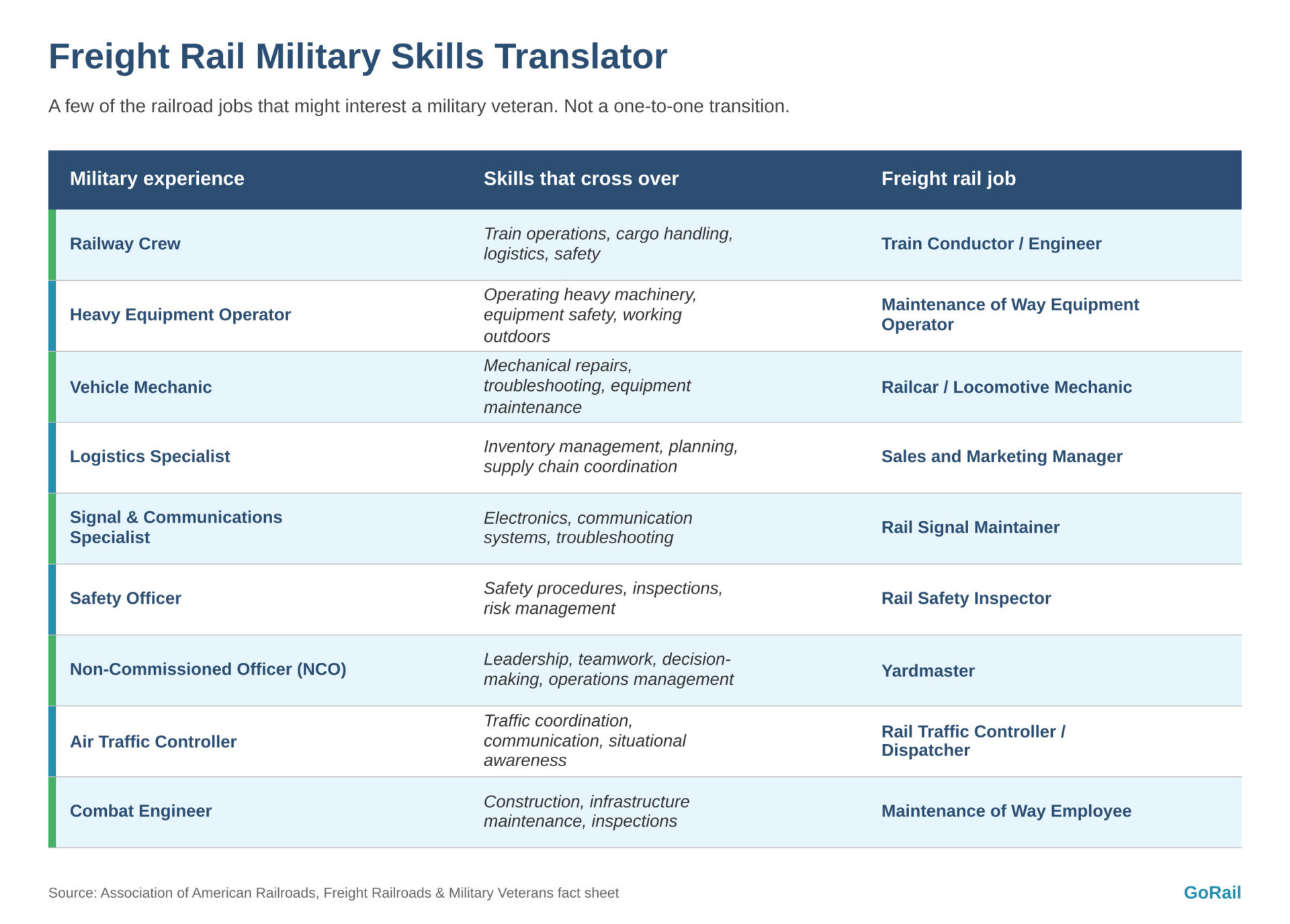
A few of those pairings are worth a second look. Air traffic controllers spend their careers keeping moving things safely in the air. Rail dispatchers do the same job on the ground, directing train movements across the network to minimize delay. And a logistics specialist who makes sure units have what they need, when they need it, has the instincts to help customers ship by rail.
A career with room to grow
Those skills can lead in many directions. Freight rail offers careers in transportation, engineering, mechanical operations, telecommunications, dispatching, technology and management. The numbers point to staying power: railroad employees have a median tenure of nearly 14 years, and rail workers earn 40% more than the national average.
Railroads have also built programs around the connection, partnering with the military to help servicemembers move into railroad careers and supporting employees who continue to serve in the Guard and Reserve.
It goes both ways
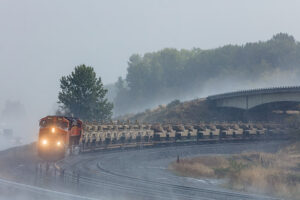
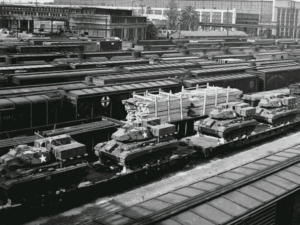
Veterans aren’t the only link between the military and the rails. Freight railroads move thousands of carloads of military equipment every year, and they were critical to America’s success during past wars.
So for a servicemember wondering what comes next, the answer might be a railroad that already knows what you can do.
This Veterans Day, November 11, is a chance to say thank you. We’re grateful to the veterans who help keep freight rail moving, and to everyone who has worn the uniform.